
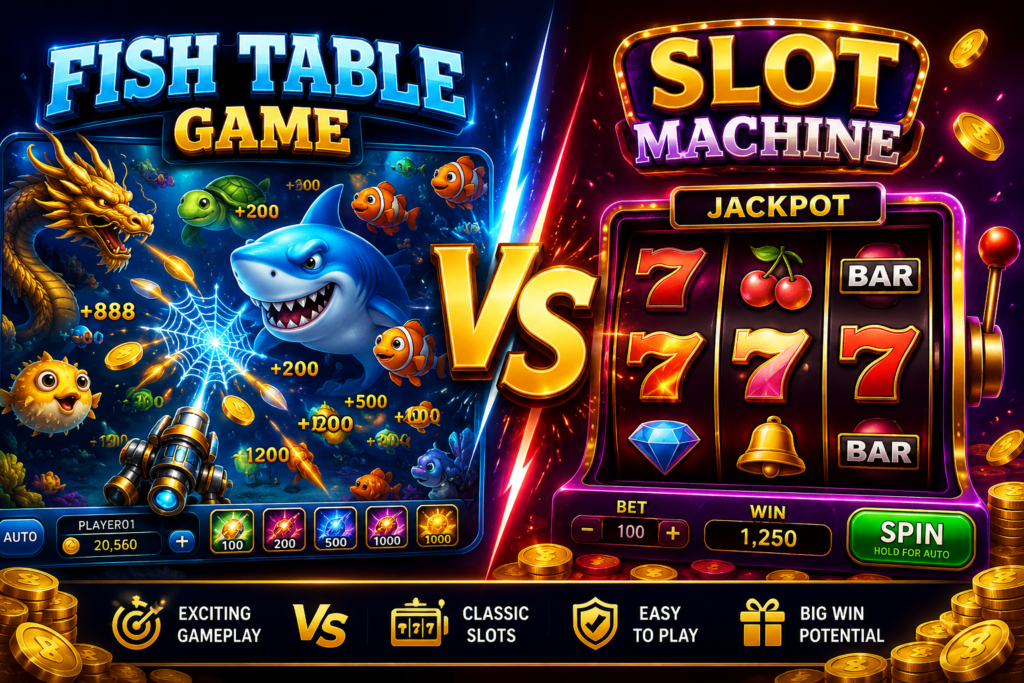
You open a Juwa‑style app, and it hits you with the same choice every time: the Fishing section or the shiny slots. One looks like a cartoon arcade, the other looks like a dopamine factory disguised as fruit.
If you’re between 18 and 25 in the US, you already know the speech: “Gambling is luck, the house always wins, be responsible.” All true. Also not helpful when you’re literally staring at two buttons wondering, okay, but which one is less dumb for me right now?
This site lives in the Juwa niche fish tables, sweepstakes‑style casinos, that whole gray area of “this is for entertainment only, but also here’s a balance counter.” So we’re going to treat your question like what it actually is: a choice about how you want to lose slowly, have fun, and maybe walk away up once in a while.
You don’t need a moral lecture. You need someone to say: here’s how fish table games actually play, here’s how slots actually work, how much control you really have in each, and which one fits your brain and bankroll better. That’s what this is.
THE THING NOBODY ACTUALLY SAYS OUT LOUD
Nobody says this out loud because it wrecks the illusion: fish table games and slot machines are basically cousins. One just cosplays as “skill‑based” while the other proudly leans into pure RNG chaos.
Fish tables started in Asian arcades and sweepstakes parlors — huge screens, joysticks, people blasting fish like it’s a weird underwater FPS. Now they live online too, including in sweepstakes and social casino sites you’d lump mentally in the same folder as Juwa. You aim a cannon, fish swim, you shoot them for credits. That aiming part is what tricks your brain into thinking “I’m actually doing something here.”
Slots don’t bother faking agency. They are what they are: you choose a game, pick a bet, hit spin, and a random number generator decides your fate. In legit casinos, slots are straight‑up defined as games where the outcome of each spin is random and not influenced by how you press buttons.
Here’s the line nobody puts on a landing page:
Fish table games feel like skill, but the house edge and randomness still own the room. Slots feel like pure luck, and they actually are.
Casino articles are starting to say this more clearly: fish tables are “a mix of luck vs skill,” because fish spawns and values are random, but you still control your aiming and when you shoot. Strategy guides tell you that better decision-making — like targeting certain fish, timing power-ups, and managing ammo — can affect how long your bankroll lasts and how often you get decent returns.
Compare that to slots where even so-called “skill-based slot machines” still give most control to randomness and only let you nudge tiny bonus parts. One Nevada casino blog literally says skill‑based slots still behave like normal casino floor games, with a set house edge around a few percent stacked against you regardless of how good you are.
So why does this matter for you, the “do I play fish or slots tonight” person? Because your brain is not neutral here:
- If you hate feeling helpless, pure RNG slots will tilt you fast.
- If you overestimate your “skill,” fish tables will convince you that you’re in control while quietly draining you harder with high volatility.
- If you have a tiny bankroll and low patience, both can be bad, but high‑volatility fish games are especially spicy.
Another thing nobody says: fish tables demand more mental energy. You’re aiming, tracking movement, timing shots, maybe competing with other players. Slots ask nothing from you except “press spin” and maybe handle a bonus feature. That’s why fish games feel more like a game and less like a machine, even though in the background you’re still just converting attempts into expected value like everything else in the casino ecosystem.
So the unsanitized truth:
- If you want vibes, animation, and minimal effort, slots.
- If you want a gambling game that feels like an arcade and rewards focus, fish tables.
- In both, the house wins in the long term. Your job is to lose interestingly, not fast.
HOW THIS ACTUALLY WORKS THE REAL MECHANICS
Let’s strip the marketing off and look at what’s actually happening when you hit play on each.
What a fish table game really is
Modern fish table games online are described as “arcade‑style video slot machines with the objective of catching fish by shooting at them with a virtual gun.” You sit at the bottom of the screen, fish swim across, you fire shots that cost a fixed bet, and each fish has a point or payout value.
Mechanically:
- The game randomly generates fish, values, and sometimes bonus waves.
- You choose when and where to shoot.
- Each shot costs something, like a “spin.”
- Killed fish convert to points or credits based on their assigned value.
Skill enters when you manage ammo, aim at easier targets, and time skills and bursts. Strategy guides talk about starting with small/medium fish, skipping fast runners, waiting for high-value waves, and using manual fire to avoid wasting shots. That’s your slice of agency.
What a slot machine really is
Slots are simpler: you pick a stake, hit spin, and a random number generator maps to reel positions and outcomes. That RNG is designed to hit a long‑term return to player (RTP), like 96%, and the house edge is the difference between 100% and that RTP.
Mechanically:
- You have zero impact after you hit spin.
- Payouts follow a paytable and symbols, nothing you “do” mid-spin.
- Skill‑based bonuses, when they exist, still sit on top of a mostly fixed house edge.
Time2play‑style resources will tell you flatly: slot outcomes are “impossible to predict reliably and don’t follow any patterns,” no matter how much your uncle swears by “hot machines.”
The niche angle most people skip
The niche question you’re really asking isn’t “what are these games,” but: where does my choice actually matter more? For fish tables, you can:
- Choose only to shoot at favorable angles.
- Avoid crowded screens where other players steal your kills.
- Slow down or stop firing during “cold” waves to protect your credits.
For slots, your only real levers are:
- Game choice (RTP, volatility, bonus style).
- Bet size per spin.
- Session length and stop‑loss/win limits.
Short list with actual opinions attached:
- Fish tables reward attention: If you’re playing distracted, they punish you harder than slots because messy aim equals wasted shots.
- Slots reward discipline: The “skill” is picking decent RTPs, sticking to stakes, and not chasing losses.
- Fish tables feel fairer in the moment: You can see where your shots went, even though the underlying hit/miss math is still coded.
- Slots feel harsher but simpler: Nothing to track, just results. This is better if you tend to overthink or tilt easily.
- Fish tables sit closer to “skill‑based gambling” that’s become popular as casinos try to attract gamers, not just gamblers. But the house still edges you out mathematically.
Once you get this, you stop asking “which is better” and start asking “which one actually suits how my brain, patience, and budget work.”
COMPARISON WHAT’S ACTUALLY DIFFERENT BETWEEN YOUR OPTIONS
| Option | What it actually does | Who it’s for | The catch |
| Fish table game | Arcade‑style shooting where you aim at fish; mix of luck and player decision. | People who like feeling in control and enjoy active gameplay | High volatility, easy to overshoot and burn bankroll if you’re tilted. |
| Regular slot machine | Pure RNG spins with set RTP and paytable. | Players who want low effort, simple rules, quick sessions | Zero influence after you spin, can feel “rigged” when cold. |
| Skill‑style slots | Slots with mini “skill” bonus parts layered on top. | Gamers who like themes, progress, and flashy bonuses | Skill has small impact; the house edge still dominates. |
If you want actual control over your decisions affecting pace and how long your credits last, I’d lean fish table game but only if you’re willing to treat it like a game, not a slot with prettier graphics. If you know you’re going to be half-distracted or you tilt fast, plain slots with sensible stakes are less mentally dangerous.
WHAT ACTUALLY HAPPENS WHEN YOU TRY THIS
Let’s say you do what everyone does: bounce between a fish table game and a slot in the same night to “see which hits.”
You start with a fish game. Maybe it’s something like Fishing War or Fishing God on a site a guide lists as top fish table options in 2026. You buy in, see colorful fish, and your brain goes, “Cool, I can actually control this.” You start shooting fast, chasing big fish because they look like real wins. Ten minutes later your balance is half gone and you’re telling yourself, “I just need one big hit.”
If you slow down and actually apply the fish-shooting tips people talk about — starting on small/medium fish, avoiding fast movers, using manual fire instead of auto — your experience changes. Your balance drops slower. You get a steady stream of smaller payouts. You still get hit with stretches where nothing dies, but you notice them sooner and either lower your fire rate or leave the game. That’s the part most casuals never see because they never stop spamming.
Then you open a slot. Maybe a 96% RTP title you saw recommended in some list. You pick a cheap bet, spin a few times, and instantly feel the difference: there’s nothing to “do.” You just watch reels. When it’s hot, it’s stupidly satisfying — line hits, free spins, multipliers. When it’s cold, you feel like you’re feeding a vending machine that keeps your snack.
What surprised me the first time I really compared the two in one session was how different the tilt curve feels. Fish tables tilt you when you see shots land visually but don’t pay what you expected, or when someone else “steals” a fish you soften. Slots tilt you when you go twenty spins with dead results and no visible feedback except your balance dropping.
Another pattern that rarely gets mentioned: time passes faster on fish tables. You’re constantly aiming, timing, moving. You forget to breathe between shots. On slots, time passes in a different way more like flipping through TikToks. Spin, flash, spin, flash. You can burn just as much money, but your brain logs it as individual rounds instead of continuous action.
When you treat both seriously, you realize:
- Fish tables reward breaks. Strategy guides literally recommend stopping, taking rest, and lowering stakes to keep decisions sharp because tired players just blast at everything.
- Slot guides from big operators focus on bankroll management: set a budget, pick games that match volatility you can handle, accept that each spin is random.
In practice this means: a “disciplined” fish table session feels like a game where you occasionally stop shooting and just watch the board. A “disciplined” slot session feels like you’re babysitting your own impulses around re‑spinning and raising bets. Neither is glamorous. But that’s what actually works.
THE ADVICE EVERYONE GIVES VS WHAT ACTUALLY WORKS
1. “Fish games are more skill, so you can beat them.”
Nice marketing angle, not reality. Reputable casino blogs describe fish tables as luck plus some skill the fish patterns and values are random, and your aim just changes how efficiently you interact with that randomness. You can stretch your bankroll and improve your average session by making better decisions, but you’re not beating the math long term. Better framing: fish tables give you more to do , not a secret edge over the house.
2. “Slots are totally rigged, never play them.”
Slots use random number generators regulated by gaming authorities; Legitimate sites and casinos publish RTP and often list volatility, which tells you roughly how swingy the game is. They are absolutely stacked in the casino’s favor over time, but that’s not “rigged” so much as “exactly what they say they are.” If you treat slots as entertainment, pick decent RTP games, keep bets within a fixed budget, and expect nothing, they’re fine. They’re only a disaster when you treat them like a paycheck.
3. “Skill‑based slots are the best of both worlds.”
In theory, yes. In practice, articles about skill‑based slot machines make it pretty clear: even with skill elements, the core payouts are still governed by the house edge and RNG. You might be able to influence minor bonus‑round results, but you’re not suddenly turning a losing game into a winning one by being “good.” If you like them, play them because they’re more fun, not because you think your gamer reflexes are going to crack Vegas math.
4. “Fish tables are safer because you can control your losses.”
You can control your behavior , not the results. Fish shooting strategy guides stress discipline — target selection, ammo management, quitting cold games — because without that, fish tables are brutally volatile. They often have high maximum payouts and high swings, which means your balance can yo-yo way harder than on a simple low-volatility slot. If you’re impulsive, the constant shooting and near-misses can be more dangerous, not less.
THE PRACTICAL PART WHAT TO ACTUALLY DO
1. Decide what kind of experience you want before you open the app.
Ask yourself: do I want “active game, lots of tapping and aiming,” or “lazy spins, minimal effort”? Fish table = active, slots = passive. Making that call first avoids the usual ping‑pong where you chase a bad fish run with random slot spins and end up losing on both sides.
2. Match game type to your current energy level.
If you’re tired, distracted, or half‑doomscrolling TikTok, fish tables will punish you. They need focus to aim and manage shots well. That’s a slot moment: pick a low bet, short session, simple game, and accept it’s just background entertainment. When you’re actually fresh and want to “game,” that’s when fish tables make more sense.
3. Set separate bankroll rules for fish vs slots.
Treat them as different categories. For example, decide that only a certain share of your session budget goes to fish tables (high volatility, higher engagement) and another share to slots (lower effort). Guides on bankroll management say the only things you truly control are what you play and how much you risk on each wager. Set caps before you start and don’t move them mid‑tilt.
4. For fish tables, commit to playing “smart or not at all.”
If you choose fish games, actually use strategy: start with small/medium targets, avoid fast fish, use manual or controlled fire, and stop shooting during bad waves. Articles specifically say being disciplined with ammo directly affects how long you stay in the game and how profitable the session feels. If you know you’re just going to spam shots anyway, you’re better off not opening fish that day.
5. For slots, choose by RTP and volatility, not just theme.
Slot guides emphasize that RTP and volatility have a bigger impact on your long‑term experience than whether the game has dragons or fruit. Higher RTP, lower or medium volatility games are usually better for smaller bankrolls and longer, smoother sessions. High-volatility slots are more like fish tables: long stretches of nothing and occasional big hits. Pick what your stress level can handle.
6. Build “session stop” habits instead of “chase back” habits.
Decide in advance what a “good session” and a “done session” looks like. Maybe that’s doubling your starting play coins, or losing no more than a set amount, or playing a fixed amount of time. Big casino blogs keep repeating the same thing: you can’t control luck, only your stop points and breaks. Apply that rule to both fish and slots, or both will eventually chew you up.
7. Don’t mix emotional states and high-volatility games.
Fish tables and high-volatility slots spike adrenaline. Playing them when you’re angry, sad, or stressed from something else is how “just a few rounds” becomes a shower thought of “why did I do that.” If you’re not in a good headspace, stick to low stakes, low‑volatility slots or just don’t play at all. Boring is cheaper.
QUESTIONS PEOPLE ACTUALLY ASK
Are fish table games better than slot machines?
“Better” depends on what you want. Fish tables give you more active gameplay aiming, timing, target choice — and are often described as mixing luck with skill. Slots are pure RNG; once you spin, you’re done. If you like feeling involved in the game, fish tables will feel better. If you want simple, brain‑off play, slots win.
Are fish table games more skill or luck?
Fish games blend both. The appearance of fish, their values, and underlying hit chances are random, but you still choose where and when to shoot. Guides emphasize that aiming at certain fish, avoiding crowded targets, and managing ammo can improve your average results, but luck still decides individual outcomes. Think “influenced by skill, powered by luck,” not the other way around.
Are slot machines just pure luck?
Yes. Major casino education sites say flatly that online slots are entirely luck-based — outcomes are determined by random number generators and can’t be predicted or influenced once you press spin. Your only decisions are which game to play, how much to bet, and how long to keep going. That’s it. Any pattern you think you see is your brain doing its usual conspiracy thing.
Which pays more: fish table game or slot machine?
Neither type is “designed to pay you more” long term; both are tilted towards the house. Some fish shooting games advertise competitive RTPs and big max wins, but they’re also highly volatile — big swings, long dry patches. Many slots sit around 94–97% RTP with better‑documented odds. In practice, your short-term results will depend more on variance, game choice, and your own behavior than on the category label.
Are fish table games safer for beginners than slots?
Not really. Fish tables can feel safer because you’re actively playing, but that can encourage over-shooting and chasing losses. Slots are simpler and easier to budget for, especially low‑volatility ones, because you can track cost per spin and set clear limits. For brand-new players with small bankrolls, a slow, low-stake slot session is usually less chaotic than jumping straight into a high-volatility fish table.
Do fish table games have RTP like slots?
Many online fish tables do have RTP and volatility stats behind the scenes, just like slots, even if they’re not always front‑and‑center. Some listings for fish shooting games mention RTP values around mid‑90s and describe volatility as high, meaning bigger swings. You usually don’t see exact hit rates for each fish, but the overall math is still tuned to a house edge.
How do I pick between fish table and slots on a site like Juwa?
Check your mood, budget, and energy. If you want to feel like you’re actually “playing,” and you’re in a focused, calm headspace, go fish table with strict ammo and time rules. If you’re tired, have a small balance, or just want background noise, pick a mid‑RTP, low‑volatility slot and set a clear spend cap. Don’t bounce back and forth mid-tilt; That’s how you lose track of everything.
Are skill‑based slots the same as fish table games?
Not quite. Skill‑based slots add small interactive elements where your input can tweak bonus outcomes, but casino analyzes say the core payouts and house edge remain similar to regular slots. Fish tables, on the other hand, make your actions constant — you’re aiming and firing all the time. Both blend skill and luck, but fish tables feel closer to an actual arcade game, while skill-based slots are still mostly slots with mini-games taped on.
SO WHERE DOES THIS LEAVE YOU?
So here’s the honest version: you’re not choosing between “winning” and “losing.” You’re choosing how you want to gamble quietly with reels, or loudly with digital fish.
Fish table games give you something to do with your hands and brain. When you actually pay attention, use targeting strategy, and quit dead waves, they feel fairer and more satisfying session by session. Slots give you less control but also less room to mess yourself up with bad decisions; it’s just spin, result, repeat, with math humming in the background.
If you want one concrete step today: next time you open your Juwa‑style app, choose one category for that session fish or slots and set a fixed budget and time limit just for that category. Play it intentionally, then actually stop when you hit the limit, instead of “just switching games.” It won’t make you immune to variance, but it will keep you from turning one bad moment into a tour of every loss option the app has.
You made it all the way through a fish‑vs‑slots article, which puts you in the top 1% of “I at least tried to think before I played.” Mildly scary, but also good for you.
Now you know why fish tables feel more “fair,” why slots feel more “rigged,” and why both are still doing the same quiet percentage thing in the background. You don’t have to quit, you just have to stop pretending one of these is secretly your side hustle.
So next time you’re staring at those two buttons, don’t ask “which will pay me.” Ask “do I want to game or zone out, and how much am I okay paying for that hour?” That question you can actually answer. The rest is just RNG with better lighting.